The hidden gains of device trust: Cost savings you didn't budget for

Why device trust isn't just about security anymore
Most of today's cybersecurity conversations and discussions revolve around risk, compliance, and management. But there's an emerging business case for rethinking how we approach device security, especially for distributed, hybrid, and BYOD-heavy organizations across the world.
Modern, posture-aware device trust solutions do more than protect your sensitive business data. They boost productivity, reduce IT overhead, and eliminate hidden costs tied to outdated device management models. The result? A more secure, scalable, and employee-friendly workplace with measurable value beyond just passing audits.
The productivity cost of inflexible security
Traditional device management tools like MDM often come with hidden trade-offs:
- Slower onboarding for contractors or new hires;
- Employee friction when personal devices are used for work;
- Unscalable IT support models for growing teams;
- Drop in productivity when devices are blocked or remotely set for an update;
- Time lost on manual follow-ups, troubleshooting, or exception handling.
These indirect costs rarely show up in budget spreadsheets but they can significantly slow down high-growth teams or remote-first businesses.
Hidden costs that add up
Organizations typically focus on the upfront expenses: license costs, security software, or audit fees. But device trust models that rely on full control and management often introduce costs you didn't account for:
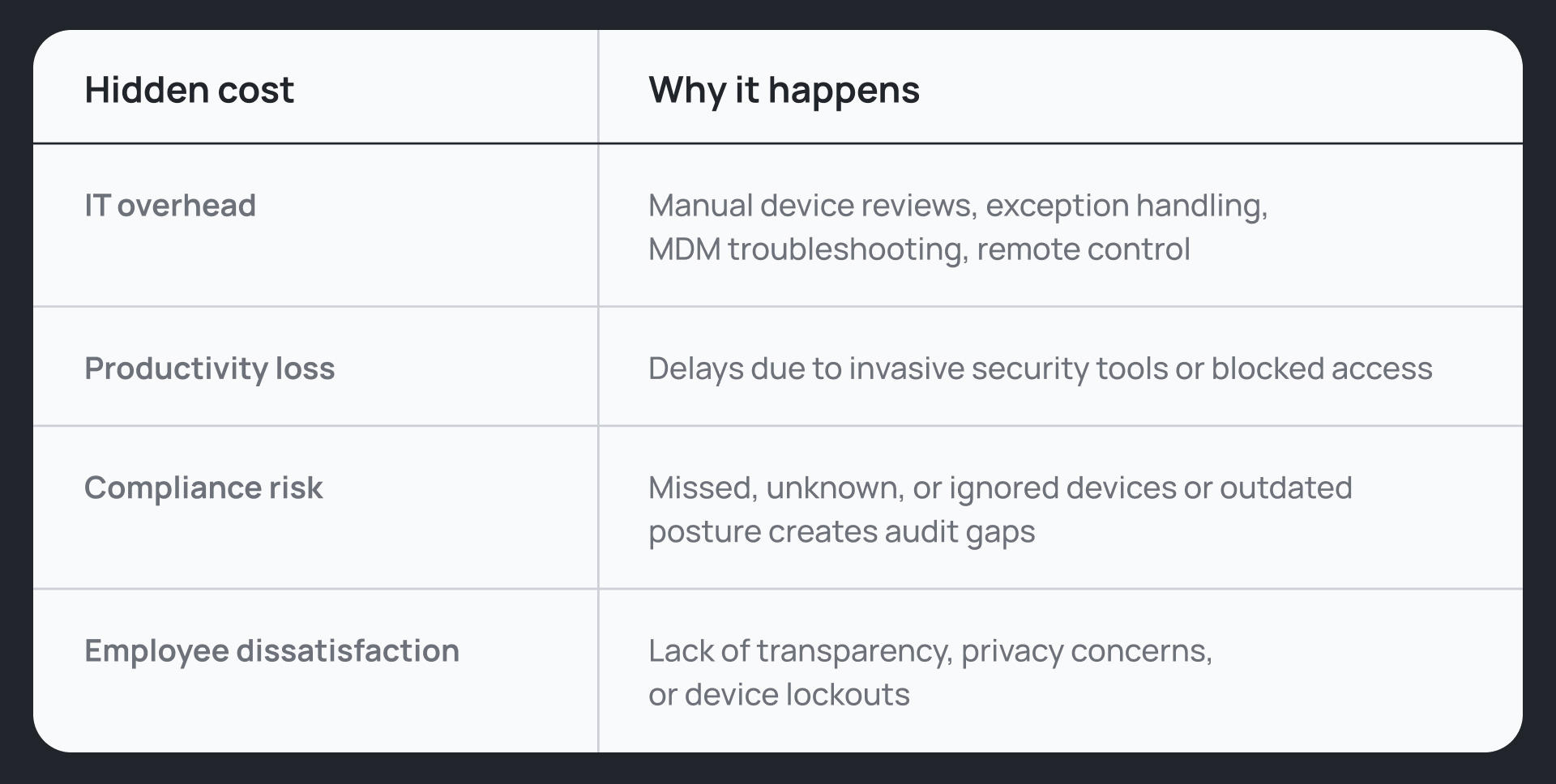
These issues often multiply across remote teams, third-party contractors or freelancers, and hybrid office setups where device variety is the norm, not the exception.
A better alternative: lightweight device trust
Instead of trying to force control on every device, modern organizations are shifting toward lightweight, posture-aware device trust. This approach aligns with how modern teams operate.
Here's what that looks like in practice:
- No taking away control of the device: Access is allowed only when the device meets security standards (e.g., OS version, encryption, screen lock), but users stay in control;
- Real-time checks at login: Instead of scanning devices 24/7, posture is verified only when it matters, before accessing work apps;
- Frictionless for IT: Security and compliance teams get full visibility and enforcement without constant maintenance; onboarding can be done remotely;
- Respects privacy: BYOD and contractors don't have to give up device ownership or accept invasive monitoring.
Business benefits you didn't budget for
Treating device security as a way to help people work better makes it easier for IT to align with business goals:
- Faster onboarding of freelancers and contractors;
- Fewer help desk tickets and IT interventions;
- Improved audit readiness with less preparation;
- Happier teams and lower turnover due to transparent policies.
All of these benefits contribute to smoother operations without sacrificing your device coverage.
How XFA helps reduce hidden costs without compromise
XFA is built for organizations that need secure access at scale, without the overhead of traditional MDMs. It gives security and IT teams full visibility of every device that accesses company data, but without invasive installs or full administrative access.
With XFA, you can:
- Enforce security policies at login, based on live posture signals like OS version, disk encryption, and screen lock;
- Cover BYOD, personal, and third-party devices without requiring full control or enrollment;
- Reduce manual work for IT, thanks to automated checks and reminders;
- Respect employee privacy, while still meeting compliance requirements like Cyber Essentials, SOC 2, or ISO 27001;
- Remotely onboard employees, no matter where they are working from.
This is device security built for the realities of modern work and the pressures of lean security teams.
Security that scales with you
Device trust is no longer just a compliance checkbox. When done right, it can save your teams hours of manual work, improve employee satisfaction, and keep your business agile in the face of growth or change.
The organizations that win in 2025 won't be the ones with the strictest controls. They'll be the ones who strike the right balance between security, flexibility, and trust.
Want to unlock the hidden value of device trust?
👉 Start your free trial with XFA or book a demo with our team.